Below is the Family Group sheet report generated by the Legacy Genealogy software.
Family Group Sheet for Harvey and Mary Jane Bacon Scott
from Legacy
1832
Mary Jane Bacon 1832 Birth Record
Mary Jane Bacon was born on March 30, 1832, in Boscawen, New Hampshire, to Dorcas Carter Bacon, age 29, and Henry Bacon, age 28.
1837 - 1838
birth of brother Charles Bacon
birth of brother David Bacon
1848
Seneca Falls Convention Historical Insight
1848 Seneca Falls Convention
Historical Insight from Ancestry.com
Credit: MPI/Archive Photos/Getty Images
During the 1848 Seneca Falls Convention, female leaders gathered together for what would be remembered as the birth of the women’s suffrage movement. -- Ancestry.com
Mary Bacon Scott Hamm mini pedigree
from Ancestry.com
__________________________________________-
Resources
"New Hampshire Marriage Records 1637–1947." Index. FamilySearch, Salt Lake City, Utah, 2011. “New Hampshire Statewide Marriage Records 1637–1947,” database, FamilySearch, 2009. New Hampshire Bureau of Vital Records. “Marriage Records.” New Hampshire Bureau of Vital Records and Health Statistics, Concord. Ancestry.com
Harvey Scott 1826-1865, is Norm's Great, Great Grandfather. He lived through the Civil War, died just before it ended that same year. He fought for the Union, which does NOT automatically make him a racist.
I've not been able to find out anything about his parents, so as far as I can tell, this is as far back as his pedigree goes.
The first photographs, Joseph-Nicéphore Niépce succeeded in recording a light-sensitive image with silver chloride. His partial success was strengthened by his ongoing research into fixing the picture with a kind of asphalt. It was in 1826 that he was able to put a view of his workshop onto a pewter plate. -- The People History
1828, sister Lucretia Scott is born
Vintage Image, Baby Girl with Cap from AntiqueClipArt.com
While I know she is born in this year, it is only because of the census records so far. I still know nothing about her parents.
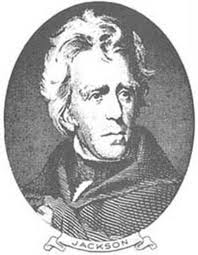
Democratic Party Created, A faction breaks off from the older established Democratic-Republican Party to become the Democratic Party. In the 1828 Presidential Elections opponents of Andrew Jackson told all who would listen that Andrew Jackson was a "Stubborn Jackass" Jackson was proud of his reputation for stubbornness and even wanted to use it as a good quality, so started using a donkey on his campaign posters . Democrats have been using the symbol of the Donkey ever since. -- The People History
1829 Andrew Jackson is elected the seventh President of the United States
I don't [yet] have any record of his childhood and young adult life. I can make some assumptions. If David is his father, he taught him how to be a mason, to lay bricks. Some things that happened in these two decades are as follows:
Michigan Became the 26th state, Michigan became the 26th state in The United States on January 26th , 1837. -- The People History
Wagon Trains Start The Journey To California, Covered Wagon Trains took immigrants on a journey from Missouri River towns to what is now the state of California. The trip was about 2,000 miles and each night the Covered Wagon Train would form a circle for shelter from wind and extreme weather, they would put all the animals in the center to prevent them from running away or being stolen by Native Americans. -- The People History
Massachusetts Child Employment Laws, Massachusetts became the first state to pass laws limiting how many hours a child laborer could be forced to work. The new laws limited a child under the age of twelve's workday to a maximum of 10 hrs. -- The People History
In this time, six men became President of the United States: Martin Van Buren; William Henry Harrison; John Tyler; James Knox Polk; Zachary Taylor; Millard Fillmore. Next up: Harvey Scott, 1850s or so, I may change my mind about the title. Is this YOUR Scott ancestor? What would you like to learn more about? Let me know by commenting below or contacting me using the form on the right.
**********************************
Below is information from Ancestry.com's Historical Insights: Establishment of County Poorhouses
I thought it was relevant because I think several of the Scott people were in either poor houses, or placed their children in orphanages because they were unable to properly care for them.
One observer noted that many people, “sought to die in starvation rather than
submit to what they regarded as the shame attending
their admission into almshouses.” 1876, Binghamton, New York.
Credit: Buyenlarge/Archive Photos/Getty Images
HISTORICAL INSIGHTSEstablishment of County Poorhouses
Establishment of County Poorhouses
“Going to the poorhouse” was not just a fear for many 19th-century Americans, it was a reality.
America was not the land of milk and honey for everyone during the Industrial Revolution. Countless thousands of people were forced into poverty and homelessness. Such unfortunates could even be sold at public auction to provide labor in exchange for room and board, a system called “outdoor relief.” Often, homeless Americans suffered from mental illnesses or disabilities that prevented them from working. With no public support, they relied on charity. Officials hoped that the creation of a tax-supported poorhouse, also known as almshouses or “poor farms,” would be a more humane—and cheaper—alternative. Most New England towns had at least one poorhouse, while cities such as Boston had several. The Massachusetts state almshouse sheltered almost one thousand people. One report found that the residences “are not at present well adapted to modern ideas of comfort and convenience,” and reports of meager food and conditions were not uncommon.
Media Gallery
Some workers took advantage of the poorhouse system to secure housing when their industries were in the offseason or did not have work. About 1800, Philadelphia, Pennsylvania. Credit: W. Birch & Son/Wikimedia Commons/Public Domain
Josephine Shaw Lowell, sister of Civil War hero Robert Gould Shaw, was a reformer who reported on conditions at poorhouses. 1863. Credit: Wikimedia Commons/Public Domain
Competition for jobs among immigrants, housing shortages, and the unstable nature of industrial work contributed to homelessness in urban areas. About 1872, Five Points, New York, New York. Credit: Interim Archives/Archive Photos/Getty Images
Approximately 12 percent of all school-age children were homeless in New York City during the 1870s. About 1881, New York, New York. Credit: Stock Montage/Archive Photos/Getty Images