Showing posts with label Private. Show all posts

Friday, October 27, 2017

Harvey Scott Part 9 Pension Index


  • Pension Index


Harvey Scott 1868 Civil War Pension Index
from Ancestry.com

Harvey Scott.  Widow Mary J. Scott.  Curiously, B.E. Badger is written in the "minor" line and is listed as "Gd'n" which, according to Ancestry, the abbreviation "Gdn" means guardian.  Not sure who was guardian for whom.
On an Ancestry Message Board, the abbreviation as it is listed here might mean that Badger is the guardian or decision-maker for Mary Bacon Scott.

On the lower half is some information I should be able to use later on.  1865, April 22, the Widow Mary J. Scott made an application 90531, certificate 99380.

On 1868, October 23, on the Minor line, is application 166.981, certificate 122.800 -- did Badger make another application for Mary?  or what?  He had three children, Marshall born 1856, Adella born 1860, and Silia born 1862.


Another Index, found on Fold3
NARA T289. Pension applications for service in the US Army 
between 1861 and 1900.


So, I wanted to see if I could get some information using the Civil War pension application numbers.  Below is some information to that effect, but I haven't accessed it yet.  It is here for your perusal.

From a Rootsweb threadThe numbers are the application numbers. If you send to NARA for the pensionfile, you will use at least one of these numbers.

This page should help you out; even though, it is Pennsylvania.

This pagewill help, as well.
_genealogy_order_forms.html 

This page is where you can order the forms that you will need to order records from NARA.

[UPDATE] I searched on Google and found (again) Fold3.  I have a premium account there, and they've provided me with most of those documents I wanted from NARA!  yay!


Widow's Application

Below is a Widow's Pension application for Mary and her three children.  It looks like she made this application with the help of B.E. Badger of Concord NH.

Widow's Pension listing all three children
found on Fold3
Approved pension applications of widows
and other dependents of Civil War veterans

No 99.380; New Hampshire; Mary J. Scott
Widow of Harvey Scott; Private, Company E, 10th Regiment NH Volunteers
Concord (NH) Agency; Rate per month -- $8 starting 31 January 1865
Additional sum of $2 per Month for each of the following children until arriving at the age of 16 years, commencing July 25 1866 wiz:
Marshall W., 10 October 1872
Adella G., 3 July 1876
Lilla E. 12 March 1878
Certificate dated 12 September 1867; Sent to B.E. Badger, Concord NH
Act 14th July 1862
Book C, Volume 9, Page 289


Claim for Widow's Pension, with Minor Children

Here is another application with more detail.  The quality of the image is not very good, but it is still readable.

Another Pension application
found on Fold3
Approved pension applications of widows
and other dependents of Civil War veterans

Concord
War of 1861, claim 99.380
Brief in the case of Mary J. Scott, Widow of Harvey Scott, Private, Co E, 10th NH Volunteers
Post office address Salisbury NH
Proofs Exhibited
Service -- Adjt. Genl (Adjutant General) Reports Harvey Scott musterd into Service September 14, 1862.  and died in US Hospital Jany 30, 1865, of Phthisis.
Death -- Surg. Genl. Reports Harvey Scott as having died Jany 30th 1865 at Hampton Genl. Hospital, Fort Monroe, VA, of Phthisis.  Lient. Tucker certifies that Harvey Scott died of Consumption got by exposure in the US Service and in the line of his duty.
Marriage -- Records shows that Harvey Scott and Mary Jane Bacon were married Jany 2, 1855
Names and dates of birth of children
  • Marshall W. Scott, born Oct 11th 1856, who will be 16 years old Oct. 10th, 1872
  • Adella G., born Feby 4th, 1860, who will be 16 years old Feby 5th, 1876
  • Lilla C, born March 13th 1862, who will be 16 years old March 12th 1878
Proof of ages -- Affidavit of Persons present
Loyalty -- Shown
Agent and his PO address -- B.E. Badger, Concord, NH
Issue certificate for Eight dollars per month, commencing January 31st, 1865, and two dollars per month additional for each of the above-named children, commencing July 25, 1866
Signed C.M. Tompkins, Examiner; Passed September 2nd, 1867
Approved S.F.S.; I.B.M


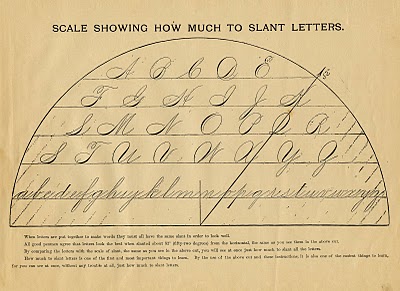
My thoughts about this document:  It looks well preserved, but I'm looking at photos of scans of photos -- you get the idea.  The writer who filled this document out has wonderful handwriting, and it looks like Spencerian penmanship.  You can get the similar books and improve your own handwriting!


In the proof of death, we find the connection between Phthisis and consumption, another term for pulmonary tuberculosis.  Also we notice that this disease is spelled differently.  We also find written down how he contracted this, and that it was in the line of duty.

We find a secondary proof of marriage date.  It is secondary, in that it isn't the original marriage document, but the writer looked at and obtained the date from that primary source.

We have the exact dates of birth for each of the children.  The third child I've always seen spelled as Silla.  This may have been an error in deciphering Spencerian handwriting, but it is Lilla.

We find that Harvey Scott was a loyal soldier.

And, finally, we find the name B.E. Badger again.  He seems to have acted as Mary Jane's liason, helping her with the government forms, endless forms.  Did he act free of charge?  Or did he charge a commission to help families out?  Perhaps this is a subject for another search, when I run out of ideas.


Harvey Scott mini pedigree
from Ancestry.com

Friday, October 20, 2017

Harvey Scott Part 8 Death and Burial


  • 30 January 1865 Harvey Scott Death 
  • Phthisis
  • Burial
  • Cemetery
  • Historical Insights -- Medicine during the Civil War

This is only three months before the end of the Civil War.


January 1865


Harvey Scott January 1865 Death Register

This is the handwritten register which includes Harvey Scott's death.  He was a Private of Company E, 10th NH Infantry, died 30 January 1865.  He died at G.H. Ft. Monroe, Virginia.  He died of Phthisis.  I've never heard of this, I'll get back to it.  Comments says E. McClellan AF?A.


Phthisis


from Medicine Civil War -- Nurses

Phthisis is a progressively wasting or consumptive condition; especially :  pulmonary tuberculosis, according to the Merriam-Webster online dictionary.  He died of tuberculosis. If you look at the register, you'll see several men died the same day.  


Civil War Diseases: Tuberculosis

Tuberculosis killed about 14,000 soldiers during the war. There was no known cure for it during the war. Even today there is no real cure, it can be treated but never cured. Once you get this disease you get it for life. -- Civil War Academy
Bright's Disease - Glomerulonephritis (kidney inflammation)   Phthisis - a progressively wasting or consumptive condition (like Pulmonary Tuberculosis)  Scrofula - Tuberculosis of Lymph Nodes especially those in the neck  Congestive Fever - Malaria  - check out GLOSSARY OF ANCIENT DISEASES available here - http://www.olivetreegenealogy.com/misc/disease.shtml
From Pinterest


Harvey Scott 1865 Veterans' Gravesites
from Ancestry.com

This is an index from National Cemetery Administration's US Veterans' Gravesites list.  Harvey Scott was in the US Army, died and was buried the same day, 30 Jan 1865.  He is buried at Hampton National Cemetery, Cemetery Road at Marshall Avenue, Hampton VA.  Section E, Site 944.


This is the entrance to the Cemetery


Harvey Scott Cemetery Entrance
Find A Grave Memorial# 118519019


This is a photo of the gravestone.  USA.  Harvey Scott.  N.H.  Pretty worn down.

Harvey Scott gravestone
Find A Grave Memorial# 118519019


Harvey Scott mini pedigree
from Ancestry.com


**********************************
below information from Ancestry.com's 


Credit: Buyenlarge/Archive Photos/Getty ImagesHarvey Scott

HISTORICAL INSIGHTSMedicine during the American Civil War

Medicine during the American Civil War

Ambulance wagon trains lined up near battlefields in
preparation for the wounded soldiers who would
inevitably require their assistance. 1863, City Point, Virginia. Credit: Buyenlarge/Archive Photos/Getty Images

During the American Civil War, the sheer volume of wounded soldiers forced doctors and nurses to develop life-saving medical techniques.

The vast majority of deaths during the American Civil War were not on the battlefield; they were caused by disease. In 1861 germ theory did not exist, the root of infection remained a mystery, and medical training was crude. Little advancements had been made in the field since the American Revolution; some physicians still championed medieval methods of bloodletting, purging, and blistering to rebalance the body’s humors. However, development in weaponry, namely faster, more accurate rifles and shells killed hundreds of thousands and left many more badly wounded. Thus the war forced doctors and nurses to rethink medical treatments, as tens of thousands of soldiers flooded the ill-equipped field hospitals. The sheer volume of injured men prompted rapid amputations. By 1865, a surgeon could remove a limb in six minutes flat. Anesthetics were common—chloroform and ether were given to patients, along with morphine for the pain. Ambulance service also was born during the Civil War. The fallen were gathered from the field, their wounds wrapped up, and they were shuttled to battle-side hospitals. But for many, these advancements in techniques and sanitation came too little too late—upwards of 500,000 Americans died from disease and infection before the war’s end.


Friday, October 6, 2017

Harvey Scott Part 6 Enlistment in US Army 1862


  • Harvey Scott Joins the Army
  • Historical Insights -- Military Advancements in the Civil War

22 August 1862


Harvey Scott 1862 Enlistment
Civil War from Ancestry.com 2017


Harvey Scott enlists in the Civil War Army.  He is 36 years old, starts off as a Private for New Hampshire, and apparently he died in the war.  This record shows that he did not survive the war.  He was in Company E, New Hampshire 10th Infantry Regiment with about 2 weeks training.  The sentence "Mustered out on 30 Jan 1865" is when he died.


Harvey Scott Enlistment record
from Fold3
State of New Hampshire.
  • his name is Harvey Scott, he was born in Londonderry Vermont (notice the correction of the place name), and he is 36 years old.
  • He was a Farmer
  • He enlisted in Merrimack, 22 August 1862 as a private in the Militia of New Hampshire for three years.
  • He is 5'9 1/2" tall, with blue eyes, brown hair and light complexion.
  • Is this his signature?  Let's look at this.  The handwriting, again, looks like Spencerian penmanship.  To be honest, it looks like the writing is uniform, and written by the same person, including Harvey's "signature" which wasn't too uncommon, I think.  It seems as if Abram A. Sleeper, the Recruiting Officer filled out the form, then had Samuel C. Bartlett sign as the Justice of the Peace.  So, unless I am mistaken, this would NOT be Harvey's signature.  

Do you know anything about this?  Did Harvey know how to write?


Vintage Image, canon-2
from AntiqueClipArt.com


Harvey Scott mini pedigree
from Ancestry.com


**********************************************

From Ancestry.com's Historical Insights: 

American Civil War -- Military Advancements


While a select few Confederates laid hands on the new weapons, most were issued traditional munitions.
Unlike the North, which had factories to produce the arms, the South remained agrarian during the Civil War.
1861, Charleston, South Carolina. 

Credit: Buyenlarge/Archive Photos/Getty Images
Advancements in military weapons made the American Civil War a conflict of unparalleled carnage.


During the American Civil War, new weaponry revolutionized battle. The repeating rifle with MiniĆ© balls that allowed soldiers to fire seven rounds in 30 seconds without reloading replaced the musket. The repeating rifle increased accuracy, extending the firing range from 80 yards to 1,000. Thus forces were spaced further apart on the battlefield and to protect themselves built extensive fortifications and trenches. Hand grenades and land mines also came into use during the war. However, the new explosives were finicky—sometimes Confederate soldiers used blankets to catch the incoming explosives and simply tossed them back to Union lines, where they exploded. From the skies, passenger balloons spied on enemy lines and from below, Confederate submarines attacked ironclad ships enforcing the Union blockade. Unfortunately, technological advancements outpaced medical innovation. The wounds caused by these new weapons were often deadly. In battle, modernized weapons proved harrowing. The sheer scale of fatalities and injuries was unmatched and, today, the Civil War remains the deadliest conflict in American history.


Media Gallery


One inventive weapon used by the Confederacy during the war was the Winans Steam Gun, which used steam instead of gunpowder to propel bullets. Only one was ever produced. Between 1861 and 1865, USA. Credit: Three Lions/Hulton Archive/Getty Images


Railroad lines carried supplies and men across the North and South during the Civil War. Thus invading armies often targeted tracks to interrupt military transportation. Between 1861 and 1865, Georgia. Credit: Wikimedia Commons/Public Domain


During the war, Confederate forces targeted Northern factories. In June of 1864, the Southern Army successfully blew up this D.C. arsenal and factory, killing 21. Between 1861 and 1864, Washington, D.C.. Credit: Kean Collection/Archive Photos/Getty Images


Adella Grace Scott Scribner Part 9 of 9, 1940s

Adella Grace Scott Scribner ... 1940s 1940 1940 Census, 1 April 1940.  Widowed, living with daughter Gertrude in Franklin, Merrimack ...